How to Bill CPT Code 99212 Without Getting a Claim Denial?
May 8, 2026
How EHR Systems Improve Behavioral Health Billing in California
June 23, 2026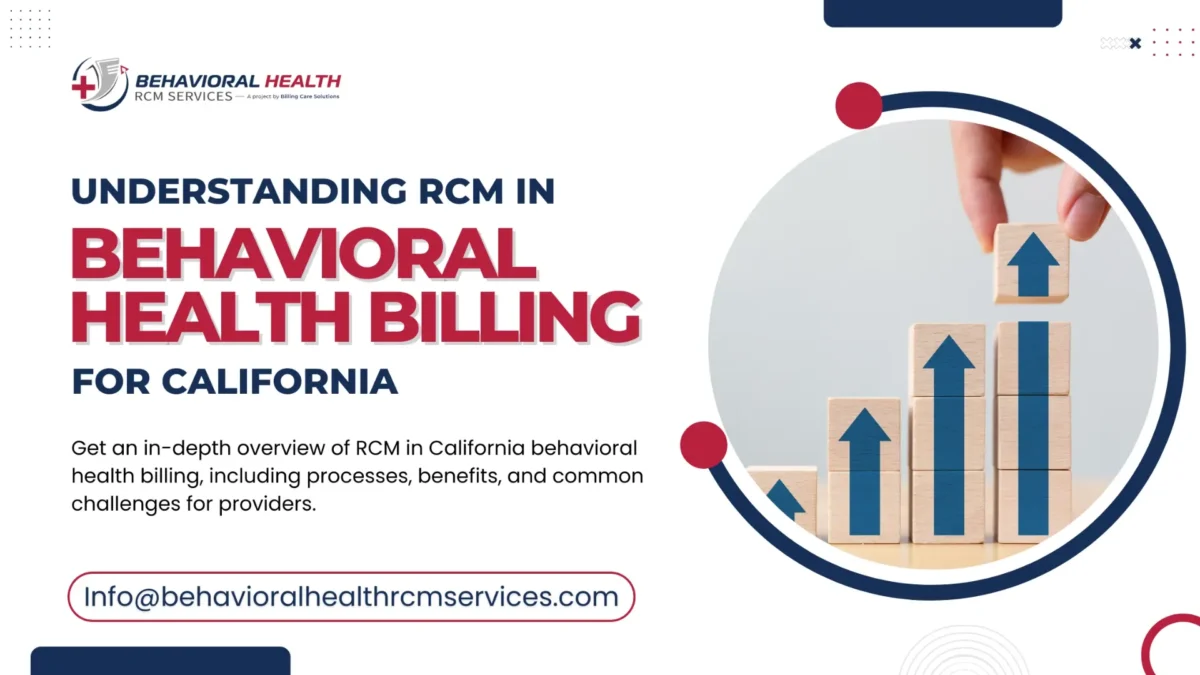
Understanding RCM in Behavioral Health Billing for California

If you are a behavioral health professional in California, you will understand how complicated the billing process can be. It can be overwhelming with the Medi-Cal requirements, commercial payer requirements, prior authorizations, and ever-changing regulations. This is where RCM starts to serve as the backbone of your financial operation.
Revenue Cycle Management is not just a billing term. The whole process helps keep your practice financially healthy. This starts when a patient makes an appointment, and continues through to the last payment processed. Smooth operation of this process equals success for your practice. Denials accumulate, cash flow suffers, and your staff gets burned out working on uncompensated claims.
This article will walk you through what RCM means specifically for behavioral health billing in California. How much more important it is for most providers, and what you can do to improve practice.
What Is RCM in Behavioral Health Billing?
RCM is essentially the financial workflow used by healthcare organizations to monitor patient care from the registration to the last payment. There are challenges associated with this that are quite different for behavioral health practices vs. general medical practices.
The CPT codes used for Behavioral health and substance use disorder services, session-based billing, and documentation of medical necessity are different. Behavioral health care is continuous and not a one-time procedure in a hospital environment. This implies that your Revenue cycle should be able to manage recurring authorizations, frequent eligibility checks, and changing treatment plans, while also keeping with California particular standards.
Many providers misunderstand it and think of it as merely making claims. RCM is actually a round trip. It begins with obtaining the correct patient data and checking the insurance coverage. It is followed by coding, claims submission and payment posting. It continues through coding and settling of denials and an investigation into why it happened and what steps can be taken to avoid losses in the future.
Why California Makes Behavioral Health RCM More Complex
Some of the most complex and stringent healthcare laws in the nation are in California. When dealing with behavioral health billing, that includes a few more layers of complexity to your revenue process.
Medi-Cal Is a Major Payer You Cannot Ignore
In California, Medi-Cal is one of the largest payers for behavioral health services. Understanding of Drug Medi-Cal, specialty mental health services and county/specialty managed plans are critical to billing Medi-Cal. Your team can lose money on each and every claim if you are not in Medi-Cal billing rules.
California Enforces Health Parity More Strictly
California has a tougher enforcement of the Health Parity and Addiction Equity Act than most states. This requires that commercial insurance companies pay the same amount for behavioral health care as they would for medical care. Because parity directly affects your revenue process strategy, it's important to understand. Parity is a key part of your revenue process strategy because it affects your appeal denials and negotiation with payers.
DHCS Guidelines Change and Your RCM Must Keep Up
California Department of Health Care Services (DHCS) is currently updating its billing guidelines on a regular basis. A well established revenue process will involve continuous staff training and regular checks to ensure that your staff stay updated on these changes.
Key Components of RCM in Behavioral Health
A proper process includes a number of stages that are interrelated. The stages are necessary to make sure that the clinic is reimbursed properly and at the same time, the clinic is not violating the regulations at the state and federal levels.
Registration and Eligibility Check of the Patient
The initial stage of any process is the correct patient registration and a check of whether they are insured. It is necessary to gather proper demographic data, insurance data, and medical records. Eligibility check eliminates the denial of claims due to the lapsing of coverage, wrong policy information, or the absence of authorities.
Coding and Charge Capture
The success of behavioral health billing depends on accurate coding. Clinics should be provided with the right ICD-10 diagnosis codes and CPT procedure codes. Errors made on this step, including the usage of outdated codes or inappropriate types of sessions may result in the rejection of claims. Adequate coding enables the delivery of services that are appropriate regarding payer needs and also achieves total recovery to the clinic.
Denial and Submission of Claims
It is important to present claims on time. Denials may be as a result of coding mistakes or lack of documentation or insurance policy provision. A good RCM program monitors claims through processing to payment, recurring patterns of denials and that corrections should be made within a short time to keep the cash flowing.
Payment Recording and Reconciliation
After the receipt of a payment, they have to be posted correctly. Reconciliation is a measure to ensure that the accounts indicate accurate balances, patient responsibilities and adjustments. This step introduces transparency in financial reporting and prevents gaps between the expectations and payments of the clinic and insurers.
Reporting and Analytics
Regular reporting and analytics are a part of RCM in behavioral health practices. Reports are able to point out the trends, monitor performance and improve areas. The denial rates, days in the accounts receivable and reimbursement percentages are metrics that enable the clinic to implement proactive adjustments to the processes.
Role of Medical Coding in RCM
The efficiency of RCM revolves around medical coding. ICD-10 and CPT codes must be used accurately when making behavioral health services. Proper coding would mean that services are properly reimbursed and decreases the chances of audit or claim rejection.
The behavioral health common coding errors are:
- Using outdated ICD-10 codes
- Putting the wrong therapy sessions (individual vs. group) into the wrong category.
- Not writing about telehealth services correctly.
- Unapproved procedures to be billed.
Clinics promote their RCM process and minimize unwarranted denials by paying more attention to coding accuracy.
|
Service Type |
ICD-10 Code |
CPT Code |
|
Individual Therapy |
F32.1 |
90834 |
|
Group Therapy |
F41.1 |
|
|
Medication Management |
F33.1 |
90863 |
|
Intake Evaluation |
F43.20 |
|
|
Family Therapy |
F90.0 |
|
|
Telehealth Session |
F41.0 |
The codes must be documented in detail. An example is that a therapy session that is billed as 90834 should have the duration in the therapy, the type of therapy, and the clinical notes. Secure video platforms and patient consent are other requirements of telehealth services in California, and therefore coding accuracy is critical to the success of RCM.
Key RCM Metrics Behavioral Health Providers Should Track
What you can't measure you can't manage. These are the key metrics that all behavioral healthcare practices in California should track.
Days in Accounts Receivable (AR): Average time it takes to collect after providing service. 45 days or longer is a red flag for behavioral health.
Clean Claim Rate: This is the percentage of all claims that are paid on the initial claim. If your rate is less than 90 percent, it indicates that you have a problem with documentation and coding within your RCM process.
Denial Rate: The industry guidelines indicate that denial rates should be less than 5 per cent. Denial management is one of the key priority RCM functions, as it is often found in higher rates in behavioral health practices.
Net Collection Rate: The percentage of collectible revenue collected. An effective RCM process should start with a net collection rate of 95 per cent or more.
First Pass Resolution Rate: Measures the percentage of claims resolved without having to be resubmitted or appealed. The higher rates, the more efficient your workflow is upfront.
Challenges in Behavioral Health RCM
Behavioral health clinics have their peculiar issues with the effective use of RCM. There are many high denial rates as the result of coding mistakes, lack of documentation, or insurance checks. The insurance industry in California is varied and has variations of Medi-Cal and the requirements of private plans, which make it more complex.
Other challenges include:
- Co-pay and patient balances.
- Maintaining state and federal billing regulations that have regular changes.
- Managing delayed payment reimbursements because of numerous procedures.
In absence of appropriate process, such difficulties may result in an unstable financial state and administrative pressure. The best solution to these problems is often to outsource to the specialized providers.
Best Practices for Optimizing RCM in Behavioral Health
The combination of technology, training of the staff, and standardized procedures is needed to optimize revenue cycle. Some best practices include:
Implementing Technology and Automated Billing Solutions
EHR-integrated software minimizes human error and speeds up the claims processing. The automation will be able to check patient eligibility, indicate mistakes in the coding and monitor the status of claims in real-time.
Regular Auditing and Reporting
Audits assist in establishing the recurrence and financial performance. An analysis of the measures like the denial rates, days in accounts receivable and reimbursements per payer enhances efficiency in the overall revenue cycle.
Staff Training and Continuous Education
The regular training keeps the staff informed on the changes in the code, billing regulations, and state-specific requirements. Experienced employees minimize mistakes and help to accomplish a successful revenue process.
Leveraging Professional RCM Services
By contracting to experts, the clinics can concentrate on treating patients. Professional services offer the knowledge of behavioral health billing, coding, and California laws.
Benefits of Partnering with a Specialized RCM Service
Collaboration with professional RCM service can change the revenue cycle management of behavioral health practices in California. Benefits include:
- Streamlined Billing Processes: Special teams are involved in billing, which saves time and mistakes.
- Less Administrative Strain: The staff will have time to attend to clinical care as opposed to financial management.
- Quickened Reimbursements: Submission and follow-up of claims in time enhances cash inflows.
- Better Patient Satisfaction: Billing becomes better and less confusing, which improves patient experience.
The specialized RCM services also offer information on California-specific payer needs, Medi-Cal regulations and compliance thresholds, which small and medium practices might not be able to easily handle on their own.
How Behavioral Health RCM Services Can Help
Behavioral Health RCM Services only works with behavioral health providers in California. Our team has a clear understanding of the unique needs of mental health and substance use disorder billing. We handle all the revenue cycles for your practice from eligibility to final payment collection.
We know Medi-Cal and are also familiar with commercial payer policies. And we know the power of parity law and documentation tricks in California to fight for your reimbursements. We always achieve results that lead to better clean claim rates, lower denial rates and reduced payment delays within 90 days of our engagement.
Conclusion
Behavioral health providers are not exempt from understanding RCM in California. It's the backbone of a successful practice! A robust process translates to spending less time chasing payments and more time on patient care.
The first step is knowing what isn't working in your process if you're just beginning to consider changing your process or if you are ready to do so. Look at denial rates, verify clean claim numbers and inquire about billing staff's appeal tracking.
If you prefer professional assistance, Behavioral Health RCM Services can assist you. Call us now for a no-cost assessment and we'll help you see the improvements in your revenue cycle that are available to you.