Understanding RCM in Behavioral Health Billing for California
June 22, 2026
National Provider Identifier Guide for Behavioral Health Billing in California
June 25, 2026
How EHR Systems Improve Behavioral Health Billing in California
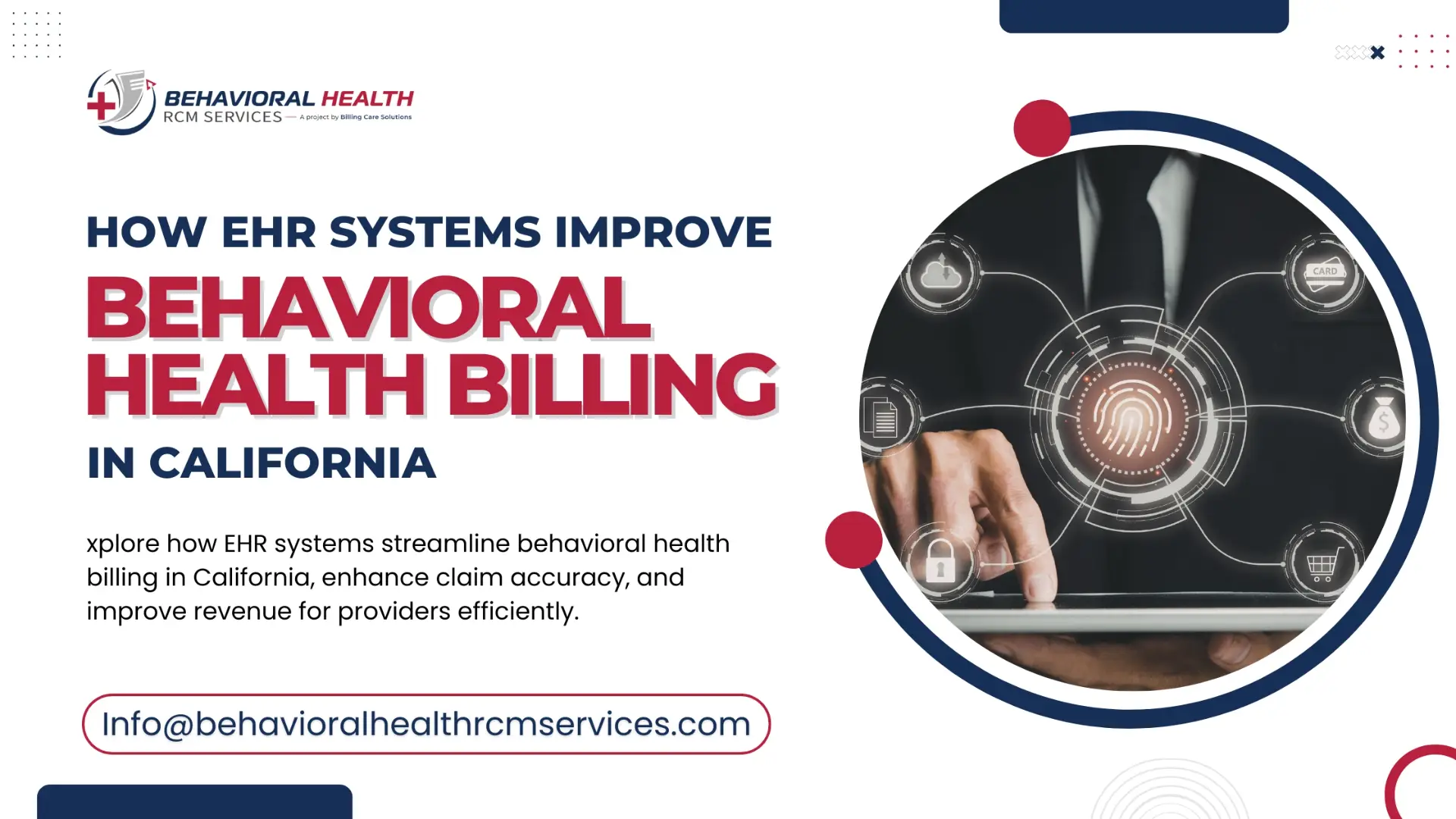
California's behavioral health providers are facing constant stress. They are working to care for patients, adhere to state requirements and somehow maintain a functional billing process. Too much to take in at a time. If you're a behavioral health provider, you're no stranger to the frustration and delays caused by billing mistakes and claim denials. This is where EHR systems come in.
This system has revolutionized the way behavioral health billing works in the last 10 years. They're not simply digital record-keeping devices. In today's landscape, EHR are a robust solution that integrates clinical documentation, coding, compliance and revenue cycle management into one system. This isn't only convenient for California providers. It is necessary.
Let's take a look at how these systems are streamlining, speeding up, and making behavioral health billing more accurate.
What Are EHR Systems in Behavioral Health Care
EHR is the term for Electronic Health Records. EHR systems are fundamentally, a software-based platform that stores and handles patient health information electronically. However, in behavioral health they go far beyond.
Systems of EHR are designed to address the needs of behavioral health practices. They offer progress notes, treatment plans, managing medications, and billing, all in one platform. This is important because the documentation for behavioral health differs from medical documentation. Gets more details, specific coding structure, more privacy law.
EHRs created specifically for behavioral health enable staff to document quicker, code more precisely, and bill with significantly less errors.
The Real Billing Challenges California Providers Face
California's healthcare billing system is among the most complicated in the nation. From Medi-Cal regulations to managed care plans, commercial insurance policies to the strict HIPAA regulations, behavioral health providers are constantly walking a tightrope.
Billing personnel waste hours manually re-entering information, tracking down missing data, and fixing errors when claims are denied without tools. Denials for behavioral health practices can be surprisingly high, and often due to documentation issues or coding errors.
In California, a lot of small and mid-sized practices are still using the old billing process. They have different systems for documentation and billing, resulting in gaps. Departmental information is lost in translation. Codes are mis-entered. Claims are sent with mistakes that are avoidable.
However, the problem with this is solved by implementing EHR systems that have everything in one place. The chances of error are drastically reduced when clinical notes and billing data are stored in the same system.
How EHR Systems Address Billing Challenges
Claim denials are one of the top financial pain points for behavioral health practices. The payment of a denied claim is not simply postponed. There is a time and cost associated with review, correction and resubmission. Over time, those costs add up.
Identifying Documentation Gaps Early:
One of the benefits of EHR systems is that they minimize denials by alerting staff when documentation is missing or incomplete before a claim is sent. The system notifies the provider if a component of the progress note is missing, enabling the provider to correct the progress note before it is sent to the billers.
Supporting Accurate Code Selection:
Some EHR systems provide billing code assistance to recommend codes for the service provided. This feature assists in minimizing coding errors, such as upcoding, downcoding and old coding.
Strengthening Documentation and Billing Alignment:
Behavioral health payers may also look at whether the services billed align with the clinical documentation. Documenting and billing within the same EHR environment enables providers to keep better track of patient records and claims submitted. This alignment minimizes denials, and ensures cleaner reimbursements.
Key Billing Features of EHR Systems
|
Feature |
Description |
Benefit |
|
Automated Coding |
Converts treatment notes into accurate billing codes |
Reduces claim denials |
|
Claims Submission |
Directly submits claims to insurance providers |
Speeds up reimbursements |
|
Insurance Verification |
Checks coverage in real-time |
Prevents billing errors |
|
Patient Data Management |
Stores treatment history and patient details |
Ensures accurate record keeping |
|
Reporting Tools |
Generates financial and operational reports |
Supports audits and compliance |
|
Workflow Integration |
Connects billing, scheduling, and clinical tasks |
Improves efficiency |
Enhancing Revenue Cycle Management with EHR Systems
Behavioral health billing has a very important aspect that is revenue cycle management (RCM). EHR Systems enhance the process of RCM, as it is faster in claims processing and real-time tracking of payment. The providers can track unpaid claims, find the bottlenecks, and fast track claims that were denied.
Comprehensive reporting tools are also provided by the EHR Systems, and they are useful in assisting the clinics to study the revenue patterns, streamline their billing processes, and strategize on the financial expansion. These systems make a continuous flow of patient intake to collection of payment by combining clinical records and billing procedures. California clinics which have adopted EHR Systems are registering increased reimbursement and reduced billing errors.
Revenue Cycle Benefits of EHR Systems
|
Revenue Function |
EHR Feature |
Outcome |
|
Claims Processing |
Automated submission |
Faster reimbursement |
|
Payment Tracking |
Real-time dashboards |
Reduced outstanding balances |
|
Denial Management |
Automated alerts |
Lower claim denials |
|
Financial Reporting |
Analytics and charts |
Improved decision making |
|
Workflow Optimization |
Integrated scheduling and billing |
Increased staff efficiency |
|
Audit Preparation |
Detailed records and logs |
Compliance assurance |
EHR Systems and Medi-Cal Billing Compliance in California
California has documentation and billing requirements for behavioral health providers that are very stringent when filing Medi-Cal claims. Simple mistakes in patient records, service documentation or coding can cause a delay in reimbursement, denials, or non-compliance. EHRs can address these requirements by providing a formal setting for collecting, storing and handling clinical data.
A large number of EHR systems come with capabilities that aid in Medi-Cal compliance, including electronic signatures, progression note templates, treatment plan monitoring, and audit-ready documentation. These tools ensure that services are documented in a way that meets the requirements of the state and these payers. EHRs can also streamline coding by providing a connection between clinical documentation and the relevant billing codes, minimizing the chances of missing essential details.
For behavioral health providers in California, implementing an EHR system is about more than a "technology upgrade. It is essential to comply with the requirements, minimize billing errors and help ensure consistent reimbursement from Medi-Cal.
Automating Prior Authorization Through EHR Systems
One of the most time consuming behavioral health billing processes is prior authorization. Many services require approval from the insurance company before they can be provided. This can involve sending clinical data, keeping track of requests, and managing authorization status.
Manual Authorization Workflows are replaced: Prior authorization is typically handled using phone calls, faxes, emails and spreadsheets without EHR. All these manual tasks take up staff time and can lead to missed approvals and documentation mistakes.
More Efficient Prior Authorization Process: These systems integrate prior authorization workflows into clinical and billing activities for improved efficiency. Once a service is scheduled, the system can identify what authorization is required, can make requests and can notify staff when it receives a decision.
To protect reimbursement: Automated authorization tracking helps prevent services that are not approved by the payers from being rendered. EHR systems minimize claims denials and preserve revenue by decreasing authorization-related mistakes.
Real-Time Eligibility Verification Using EHR Systems
There may be problems with insurance eligibility that lead to billing difficulties. Pre-authorizing coverage before a patient visits the practice is a way to prevent claim denial and payment delays.
Verify insurance eligibility: Modern EHR systems can check insurance eligibility as services are being rendered. Staff can easily find out if the coverage is in place and any restrictions that might impact reimbursement.
Determining Authorization and Referral Requirements: Eligibility verification tools also show if referrals or prior authorizations may need to be completed, or if there are other requirements that need to be met, before treatment is provided.
Enhancing Financial Transparency: If the information about coverage is provided prior to the appointment, staff can provide information about benefits, copays, and patient responsibility in advance. This not only aids in billing accuracy, but also enhances the patient experience.
Choosing the Right EHR System for Behavioral Health
General healthcare software may not be ideal for behavioral health, as it has specific documentation, compliance, and billing needs. When selecting an EHR system, it's essential to consider more than just the standard record keeping features and prioritize those that streamline clinical workflows, reimbursement, and compliance with regulations.
Behavioral Health-Specific Documentation Tools:
The ideal EHR system should come with templates for: Psychotherapy notes, Treatment plans, Psychiatric evaluation, Progress notes, Care coordination activities. Specific documentation applications are available for each special area of care, to ensure that providers have full and up-to-date, compliant patient records.
Integrated Billing and Coding Support:
Behavioral health systems of EHR should be integrated and available in a single platform. Integrated billing features reduce manual work and help improve claim accuracy.
Prior Authorization Management:
Authorizations can be tricky for behavioral health providers. Built-in authorization tracking systems enable staff to keep track of the necessary authorizations, submission status and dates, reducing reimbursement concerns.
Real-Time Eligibility Verification:
Eligibility verification tools enable practices to verify insurance coverage before providing services are rendered. The feature reduces the number of claim denials, establishes patient financial liability and enhances front-office efficiency.
Compliance and Security Controls:
Behavioral health records may include sensitive patient information, which must be protected with robust security measures. Systems should have role-based access controls, audit trails, data encryption and compliance features that meet HIPAA requirements.
Reporting and Analytics Capabilities:
Extensive reporting options enable practices to track financial performance, claim trends, provider productivity, etc. and identify areas of improvement in revenue cycle management.
Interoperability and System Integration:
Seamless integration with labs, pharmacies, billing systems, and healthcare systems enhances care coordination and streamlines administrative tasks. Clinical and financial workflows are more efficient with strong interoperability.
Best Practices for Maximizing EHR System Efficiency
The adoption of an EHR System is not the only thing to do. To be able to make billing, documentation and reporting, the clinics should educate the staff on how to use the system. Redundancy can be avoided by trying to optimize the workflows within the system and enhance productivity.
It is very important to update the system and maintain it regularly to ensure that it is secure and working properly. Periodical review of billing, monitoring key performance measures, and modification of procedures should also be part of the behavioral health provider. These best practices help in ensuring that EHR Systems can be used to bring the highest value in terms of billing efficiency and accuracy.
Case Studies and Success Stories
In California, there are a number of behavioral health clinics that have managed to implement EHR Systems with which they have achieved success in billing. A clinic noted a 30 percent decrease in the number of claims denials after six months of implementation of an integrated EHR System.
The other clinic reimbursed quicker and better managed patient records giving its staff more free time to work on clinical care. All these success stories prove that EHR Systems are not merely administrative tools, but crucial solutions to operational excellence of behavioral health billing.
How Behavioral Health RCM Services Supports EHR Systems Implementation
We are Behavioral Health RCM Services, which focuses on simplifying billing and revenue cycle management of behavioral health providers in California. Our team assists the clinics in the successful implementation of EHR Systems that do not disrupt the current workflow. We help with claims automation, coding accuracy, insurance verification and reporting, eliminating errors and speeding up reimbursements.
Under our mentoring, we will assist clinics to streamline their EHR Systems to enhance financial outcomes without violating HIPAA and California state laws. We aim to empower the providers to concentrate on the quality of care they offer to the patient and we take care of the burden of billing processes.
EHR Systems automatically convey the treatment notes into precise billing codes and reduce manual entry errors and provide claims to be submitted correctly which reduce denials and enhance the overall revenue of behavioral health providers significantly.
Conclusion
California has complicated behavioral health billing where many issues of codes, claims filing, compliance and revenue management have been experienced. The EHR Systems offer a multi-faceted solution through automating the billing process, eliminating errors, enhancing compliance, and improving revenue cycle management.
Those clinics which embrace these systems enjoy quick reimbursements, decreased denials and enhanced financial reporting. The adoption of a good EHR System would be an investment in quality care as well as operational efficacy. The behavioral health practitioners in California are invited to consider the EHR Systems as a vehicle to change the billing operations in the state and ensure financial stability in the long term.